


Sustainability at SNNP

Sustainable Development of the Company is the development of the quality of the supply chain covering the process of sourcing raw materials, efficient use of resources, work process development, product and service development, adding value and developing employee potential, sharing knowledge to the community, improving the quality of life of the community and participation in solving community environmental problems with the objective of
- Reduce and control environmental impacts that may occur
- Create shared value between the Company and stakeholders in every sector
- Supervise work to be in accordance with the legal framework and Company’s regulations
The Company is committed to maintaining itself as a role model company for society (Good Corporate Citizen) in conducting business sustainably and be able to manage the business to grow steadily and be accepted in society (Corporate Social Responsibility) on the basis of ethics and corporate good governance principles consistent with the vision
“Focus on the excellence to be a producer and distributor of beverage and snack products, good in both quality and service” and the mission of the Company “Becoming a public company conducting business fairly with responsible to society, business partners, and the environment sustainably”.
Sustainability Development Framework and Strategy
Srinanaporn Marketing Public Company Limited is committed to building an Inclusive Value Chain by empowering smallholder farmers, local communities, employees, and diverse business partners to actively participate in and benefit from the Company’s business growth. Through fair partnerships, knowledge sharing, and capacity building, the Company seeks to generate sustainable shared value for both the organization and society. This commitment is implemented through the Company’s sustainability framework and strategic initiatives as outlined below.
Sustainability Development Framework
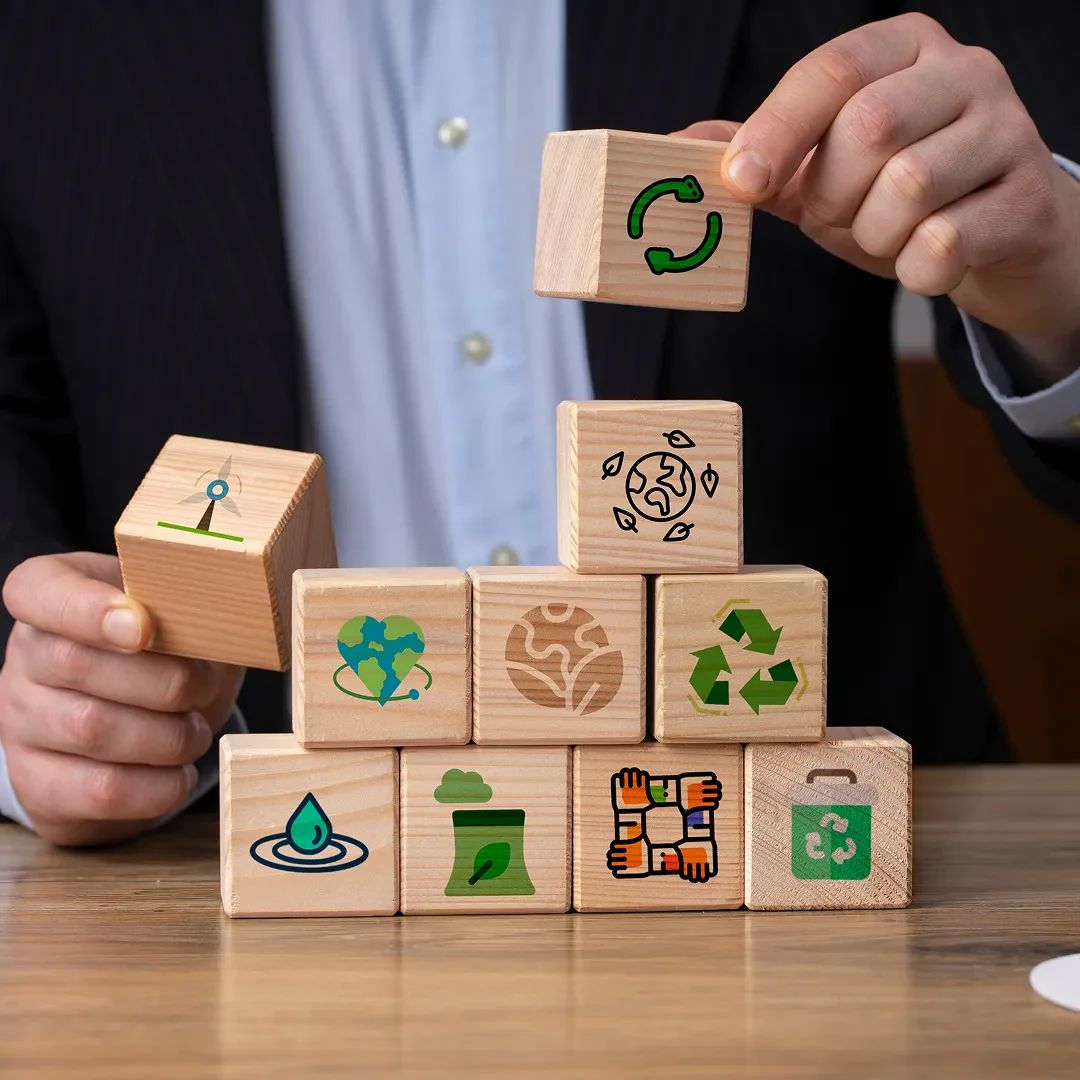
Environment Dimension: Focus on the efficient use of natural resources, the reduction of greenhouse gas emissions, and the promotion of biodiversity conservation across the value chain.
Social Dimension: Empowering people and communities through sports and education, while expanding inclusive opportunities for all genders, age groups, persons with disabilities, and employees at all levels to enable sustainable shared growth
Governance & Economic Dimension: Conducting business with transparency, ethics, and accountability, while leveraging innovation and technology to create value and enhance sustainable competitiveness throughout the business value chain.
Sustainability Strategy
The Company’s sustainability strategy is designed to drive long-term business growth while ensuring balanced management of economic, social, and environmental dimensions. This is undertaken under the principles of good corporate governance, transparency, and effective risk management. The Company integrates material sustainability-related matters, in accordance with ISSB Standards, into its corporate strategy and operations to support continuous value creation, in alignment with the United Nations Sustainable Development Goals (SDGs) and the Company’s vision.


Environment
- Enhance resource efficiency and develop effective waste management practices across production processes, packaging, and the supply chain.
- Reduce greenhouse gas emissions and increase the proportion of renewable energy use.
- Protect and promote ecosystems in and around the Company’s areas of operation.

Social
- Communities: Create employment opportunities, support income generation, and sustainably enhance the quality of life of local communities.
- Sports and Education: Promote access to sports and education at all stages of life, reduce social inequality, and strengthen learning potential to equip youth with future-ready skills.
- Society: Uphold human rights and promote equality, occupational health and safety, diversity, and social inclusion.

Governance
- Conduct business with transparency, fairness, and integrity to build trust and confidence among stakeholders.
- Establish strategic partnerships to strengthen long-term business resilience, enhance the competitiveness of products and services, and reinforce business capabilities across the entire value chain from upstream to downstream.
- Advance innovation and technology in product manufacturing, packaging development, and end-to-end logistics and distribution processes.

Stakeholder Management Process
The Company has established a structured stakeholder management process to support the identification and management of sustainability-related risks and opportunities that may have a material impact on its financial position, financial performance, and cash flows, in accordance with the disclosure framework of IFRS S1. The key elements of this process are as follows:


Stakeholder Prioritization

Collection & Analysis

Action Planning & Accountability

Governance & Reporting

Materiality Identification Process (GRI 3-1)
Identification of Sustainability Topics
The Company identifies sustainability topics relevant to its business operations by considering its corporate strategy, business plans, and business value chain. This is undertaken alongside a review of global sustainability trends, including the United Nations Sustainable Development Goals (SDGs), as well as sustainability metrics relevant to the food and beverage industry at both national and international levels, including GRI, SASB, and the sustainability metrics for listed companies issued by the Stock Exchange of Thailand (SET ESG Metrics). Human rights considerations across the value chain are also incorporated to ensure comprehensive coverage of economic, social, environmental, and governance dimensions.
Develop Materiality Assessment
The Company has enhanced its materiality assessment process by evaluating both the positive and negative impacts of sustainability matters on stakeholders, as well as the risks and opportunities that may affect its operating performance, financial position, and value creation capability over the short, medium, and long term. This approach is aligned with the principles of IFRS S1, incorporating a double materiality perspective. (Double Materiality)
Prioritize the Most Significant of the Impacts
The Company prioritizes sustainability issues based on stakeholder engagement outcomes and an assessment of the severity and likelihood of both positive and negative impacts. This process enables the identification of the most significant sustainability-related risks and opportunities that are genuinely material to the Company’s business.
Reporting and Assessment endorsement
The results of the materiality assessment and prioritization process are reported to the Company’s Corporate Governance and Sustainable Development Committee (SDCOM) for review, consideration, and endorsement. The endorsed outcomes are subsequently used to inform the formulation of corporate-level strategies, targets, and sustainability-related risk and opportunity management plans, in accordance with the requirements of IFRS S1.

Identification

Develop Materiality Assessment

Prioritize the Most Significant of the Impacts

Reporting and Assessment endorsement
Material sustainability issues
In this regard, the Sustainability Working Team reviewed and proposed material sustainability-related business issues to the meeting for consideration. These issues were approved at the Corporate Governance and Sustainable Development Committee (SDCOM) Meeting No. 2/2025, held on 22 December 2025, to serve as the operational framework for addressing material sustainability issues and advancing internationally recognized Sustainable Development Goals in 2026.
The identified material issues encompass economic, social, and environmental dimensions, as well as business conduct under the principles of good corporate governance and respect for human rights. These issues influence the attitudes, behaviors, and expectations of stakeholders across the entire value chain.
In total, the Company has identified 15 material sustainability issues. The prioritization of these issues is based on the outcomes of the stakeholder engagement process, together with an assessment of the severity and likelihood of both positive and negative impacts on the business and its stakeholders. This approach enables the identification and selection of the most material issues, reflecting sustainability-related risks and opportunities that may significantly impact long-term value creation and the Company’s sustainable growth.
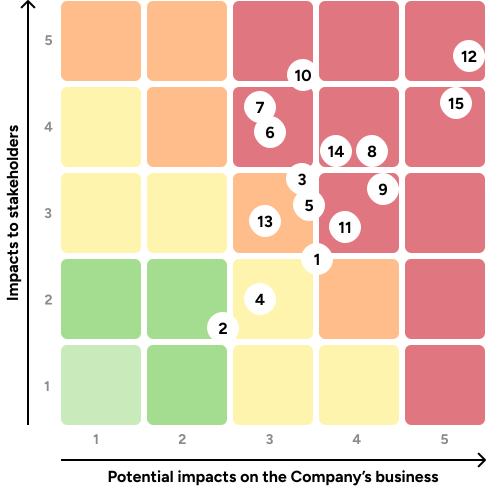
Environmental dimension:
- Packaging Management
- Food Waste Management
- Climate Change
- Biodiversity
- Operation Eco-Efficiency
Social dimension:
- Product Labelling & Marketing
- Health & Nutrition
- Occupational Health and Safety
- Labor Practices
- Product Quality and safety
- Society development and community relations
Governance dimension:
- Governance & Transparency
- Data Privacy and Security
- Innovation Management
- Supply Chain Management
To reflect the Company’s approach to sustainable business operations, the Company presents its performance on material issues across three key dimensions: economic, environmental, and social, under the principles of good corporate governance. Further details for each dimension are provided below.